Introducing RLNC
Provably optimal coding
What is RLNC?
Random Linear Network Coding (RLNC) is an advanced form of erasure coding that transforms data into smaller chunks, encoding them into random linear combinations before transmission. This significantly improves network efficiency and fault tolerance, ensuring data can be accurately reconstructed even if some pieces are lost.
Who created RLNC?
Optimum co-founder Prof Muriel Médard co-invented RLNC through pioneering research in her lab at MIT.
How does Optimum
use RLNC?
Optimum uses RLNC to accelerate blockchain data propagation by encoding transactions, blocks, and data blobs into efficient, resilient packets. This dramatically reduces latency and bandwidth usage, ensuring all critical data reaches its destination quickly and reliably, maximizing validator rewards in the process.
Introducing
The Optimum Network
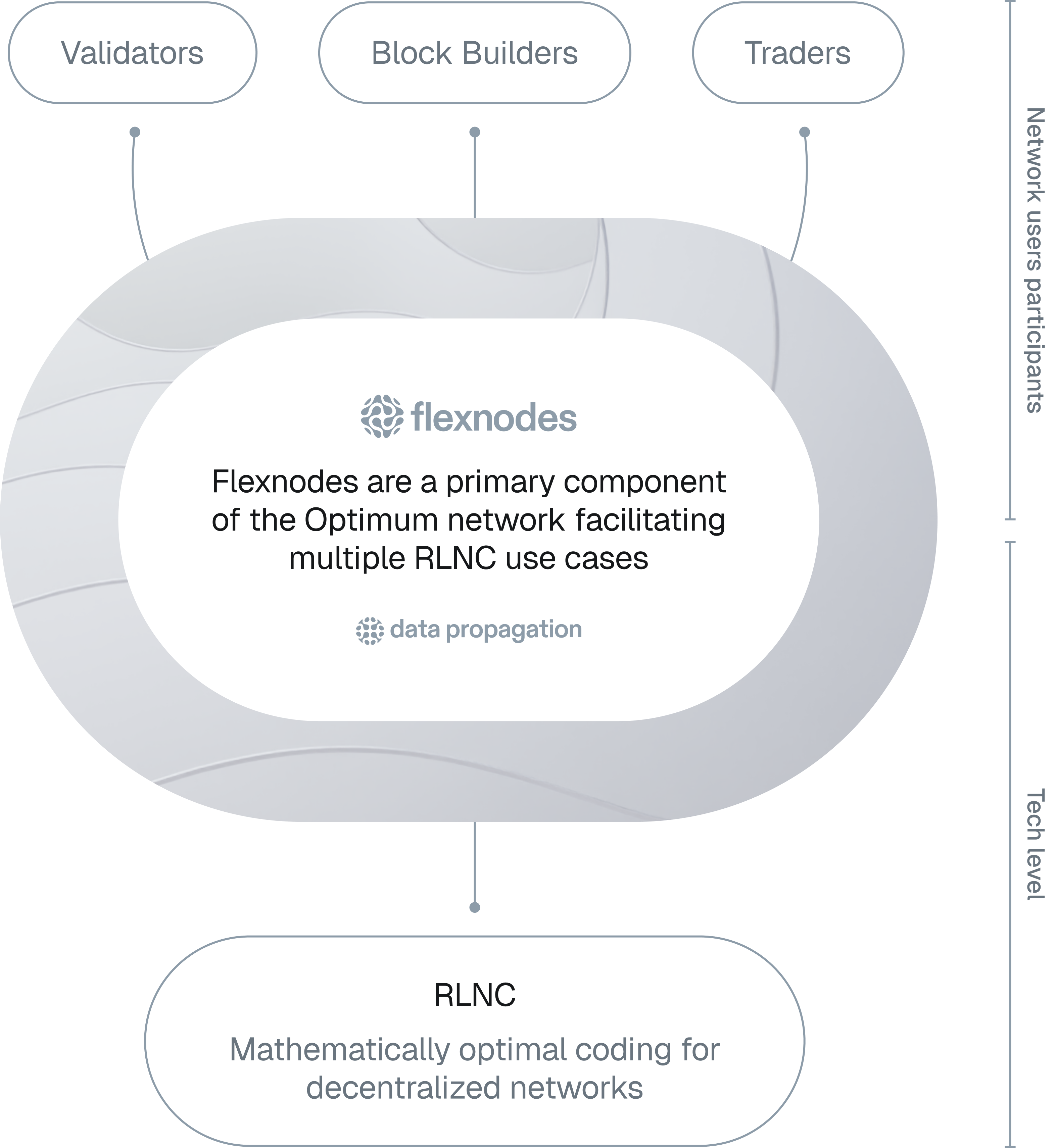
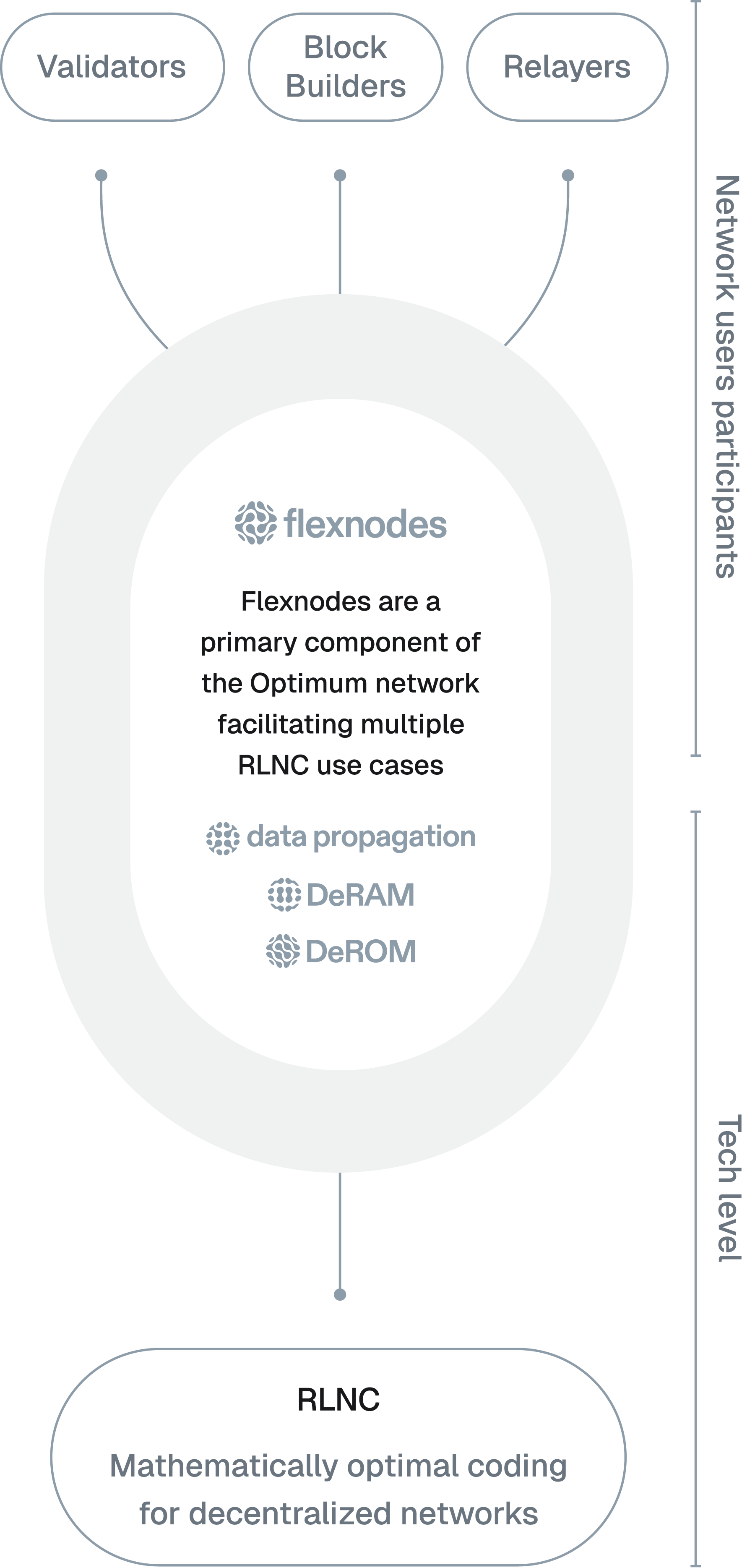
The Optimum Network is a global mesh of Flexnodes that uses RLNC to move blockchain data faster. Its first protocol, mump2p, brings this to Ethereum, delivering faster block propagation for validators, with immediate performance and APR gains and minimal infrastructure changes.

Optimum for Validators
A high-speed data propagation protocol for Ethereum, accelerating blocks and attestations to boost validator performance and rewards.


Optimum for Traders
A high-speed data acceleration network that delivers signal sooner to inform trading strategy and lands onchain transactions faster.
Optimum network
components & RLNC


For high-performance Blockchains
Scale without sacrificing decentralization
For your users and builders
- Users and app builders get best-in-class experience
- Consistent performance at global scale
- No changes to how ecosystem apps interact with the chain
- Meet global demand & increasing decentralization
For your node operators
- Validators operate more efficiently and profitably
- Faster block delivery across the fleet
- No changes to existing consensus mechanism
- Drop-in integration, no protocol modifications required